Card Readers vs. Keypads vs. Biometric Access: Which One is Best?
The conventional lock and key are no longer sufficient at a time when security is of utmost importance. Given that the worldwide market for physical access control systems was estimated to be worth an. Astounding US 8.1 Billion dollars in 2022 and is projected to grow to US 21 billion dollars by 2032, it is clear that risks have increased in tandem with improvements in physical security, which has resulted in the development of door access control systems. These devices, which range from key fob biometric door scanner, provide a combination of ease and control in addition to improved security.
Knowing the specifics of access control systems is essential, whether you’re a homeowner looking for peace of mind or a company owner protecting important data. As we transition from commonly used keycards to contemporary biometric solutions, this log will assist you in making well-informed judgements regarding your access control security requirements.
What is a door access control system?
An electronic access control solution called a door access control system is made to control and limit who is allowed to enter a security door in a certain space or building. Modern door access control systems employ electronic procedures to verify, authorize and audit entrance, in contrast to older access control methods that rely on physical items and manual labor.
These systems are a combination of software and hardware elements for access control. They guarantee that only those with the proper credentials can enter the protected area by providing a smooth interface between the individual using it and the area in question. These systems, which make use of technology, offer a more reliable, adaptable, and effective means of securing buildings, whether they are residential or commercial.
Choosing the appropriate access control system is essential to protecting your property in the quickly changing security landscape. Since 2006, the security surveillance system has led the way in offering state-of-the-art security solutions throughout Colorado. We have experience with door entry systems, wireless surveillance, home security cameras and complete access control systems.
Making an educated choice can be aided by being aware of the subtle differences between various access control techniques. Let’s examine the three main systems: biometric, keypads, and card readers
Card readers: Effective and Monitoring
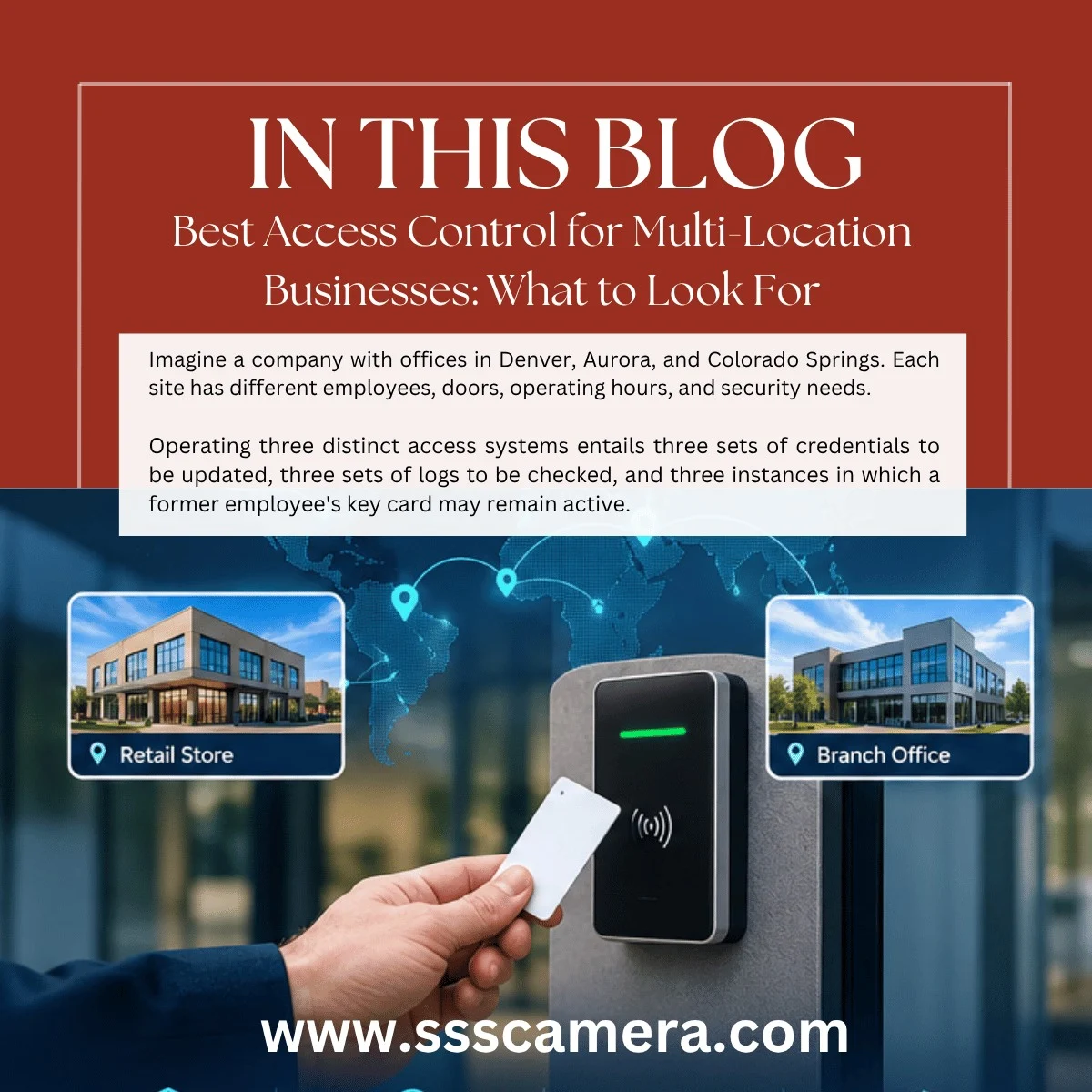
How they operate: magnetic stripe or RFID cards are used by card readers. To obtain access, users show their cards to a reader.
Advantages:
- Fast access: easy card tapping or swiping allows for quick entry.
- User monitoring: give each person a unique card so that thorough access logs are possible.
- Scalability: perfect for business with lots of users.
Cons:
- Card misplacement: security problems may arise from misplacement or stolen cards.
- Sharing: card sharing has the potential to jeopardize security.
- Maintenance: consists of continuous card issue and deactivation management.
Ideal for: companies, academic institutions, and establishments with several departments that need regulated access.
Keypads: Easy to Use and Economical
How they operate: to open doors, users enter a numerical number on. A keypad.
Advantages:
- No physical tokens: this removes the need for keys or cards.
- Easy installation: simple setup and simple functionality
- Cost-effective: a cost-effective option for smaller properties.
Cons:
- Code sharing: unauthorized access may result from shared codes.
- Wear patterns: keys that are used frequently may exhibit wear that suggests the code.
- Limiting tracking: difficult to trace unique user access unless individual codes are assigned.
Ideal for: low-traffic areas, residential buildings and small workplaces.
Biometric entry: Tailored Protection
How they operate: biometric systems employ unique physical traits, such as fingerprints, face recognition, or iris scans, to authenticate people.
Advantages:
- Improved security: since biometric information is specific to each person, it is less likely to be accessed by unauthorized parties.
- Removes physical tokens: cards and codes are no longer required.
- Comprehensive logs; in-depth documentation of situations involving access.
Cons
- Greater initial investments: high-end technology is more expensive.
- Privacy issues: some users might be reluctant to divulge their biometric information.
- Error potential” recognition may be impacted by elements such as unclean sensors or small wounds.
Ideal for: modern smart buildings, research centers, high-security zones.
Comparative Overview
| Features | Card readers | Keypads | Biometrics |
|---|---|---|---|
| Security levels | Medium | Low-medium | High |
| cost | Medium | Low | High |
| convenience | High | Medium | High |
| Risk of sharing access | Medium | High | Low |
| Ideal for | Business | Home/small office | High-security area |
How can you select the best door access control system?
A crucial choice that affects more than just security is choosing the appropriate door access control system. It all comes down to selecting. A system that works well with your operational flow, complies with your security requirements, and offers users an easy-to-use interface. But how can you make an informed and wise decision when faced with so many possibilities, such as key cards, biometrics, and multi-factor systems?
Recognize your needs for security.
It’s important to have a clear idea of what you want from your access control system before getting into the details.
- Security level: varying security levels are required in various contexts. Determine what is best for you
- User traffic: determine how many people are using and accessing events. Areas with heavy traffic may choose quick access options.
Integration with current frameworks:
Your new solution shows argument and supplement your current security architecture rather than operating in a vacuum.
- Compatibility: make sure that existing technologies, such as video surveillance, integrate seamlessly.
- Upgradability: select a system that can be adjusted to new technologies and is prepared for the future.
User Experience
The most effective system has low learning curves and is easy for consumer use.
- Easy to use: to guarantee seamless everyday operations, give priority to usability.
- Training: consider the administrators’ and users’ training requirements.
Implications for costs:
Making a budget is essential. Examine the long-term financial efforts in addition to the initial expenses.
- Making a budget is essential. Examine the long-term financial effects in addition to the initial expenses.
- Initial investment: take into account possible infrastructure modifications, software, and installation.
- Maintenance: take into consideration recurring expenses, system upgrade, and possible replacement.
Compliance and data security:
In the current digital era, data security is critical. Make sure your system complies with regulations and is safe.
- Data protection: compliance with data protection standards is mandatory.
- Compliance: adhere to national and international security and data management laws.
Dependability of vendors:
The quality of your system depends on the team who developed it. Be careful when selecting your merchant.
- Reputation: choose a supplier with a stellar reputation in the field of access control.
- Support: make sure they provide strong support and are there for you when you need them.
Frequently Asked Questions (FAQ’s):
About Security Surveillance System
Security Surveillance System is a locally owned, licensed security camera company based in Denver, CO. Since 2006, we have installed hundreds of commercial and residential security systems across Colorado, including video surveillance, access control, intercom, and burglar alarm systems, backed by a one-year warranty on all parts and labor for full installations.