NDAA Compliance for Colorado Business Security: A Strategic Guide
One is invited to visualize a retail property situated along East Colfax Avenue, an office edifice in proximity to Interstate 25, a residential apartment complex in Aurora, and a dealership in Colorado Springs. It is evident that all four subjects require surveillance; however, it is crucial to note that their individual needs are significantly divergent. Strong low-light performance is necessary in large parking lots. It is possible that another individual may require a process of verification at a single lobby door. A fifth project might be accompanied by a contract that stipulates precise equipment requirements.
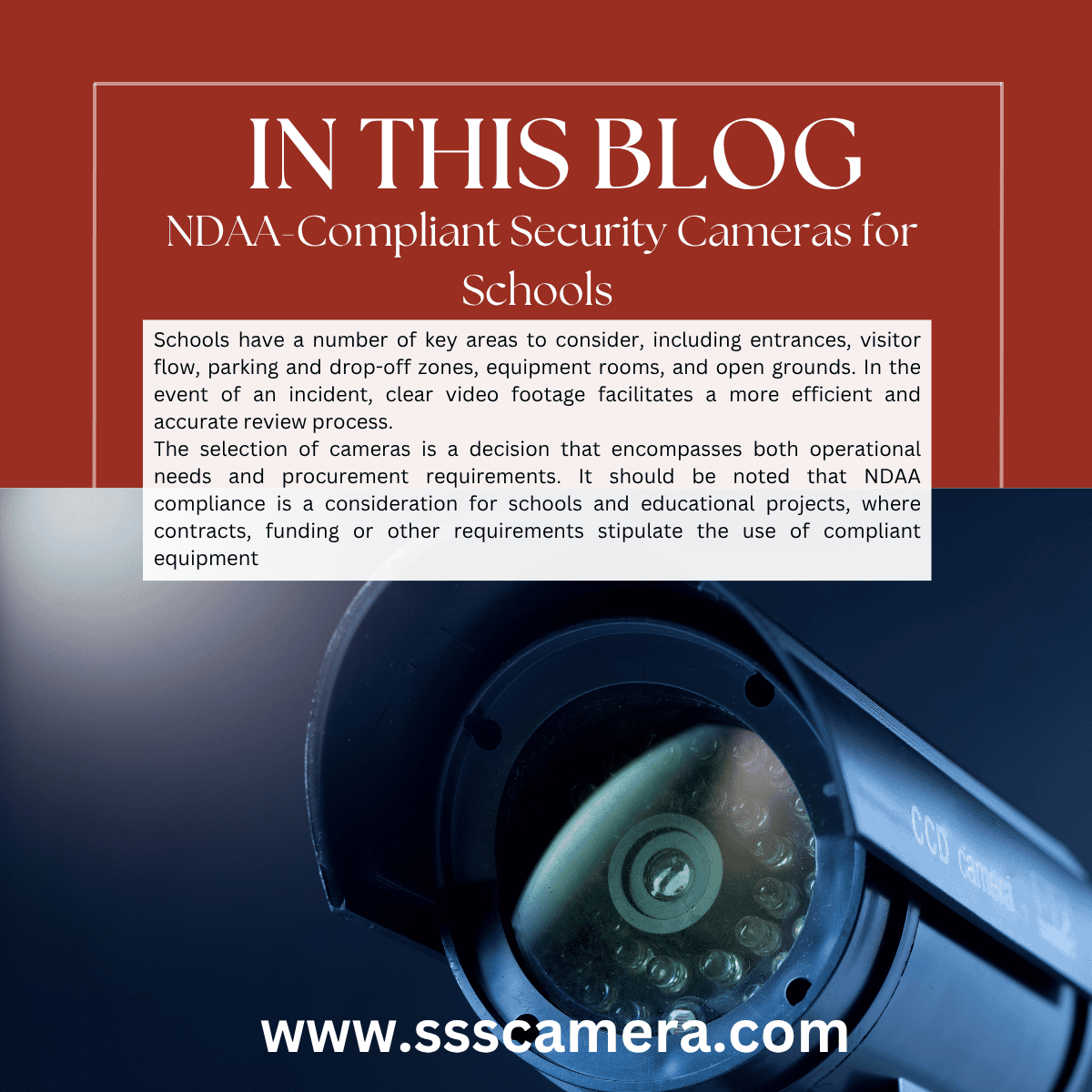
The latter scenario highlights the relevance of NDAA compliance. In summary, it is imperative to ascertain whether National Defense Authorization Act (NDAA)-related requirements are applicable to the project prior to the selection of equipment. While not all Colorado businesses are required to use compliant cameras, certain projects may stipulate the use of such cameras.
What Are NDAA-Compliant Security Cameras?
NDAA and Section 889 in Simple Terms
The National Defense Authorization Act (NDAA) is the annual federal law that allocates funding to the United States military. Section 889 of the fiscal year 2019 version imposes restrictions on federal agencies, and in some cases their contractors, with regard to the procurement and utilisation of certain “covered” telecommunications and video surveillance equipment from specific named manufacturers.
What Does “NDAA Compliant” Mean for a Camera?
In everyday use, an NDAA-compatible camera is defined as one that does not originate from a manufacturer with restricted components and does not contain restricted components. The term is a shorthand reference rather than a formal certification, and it should be noted that this article is not intended to constitute legal advice. The degree of compliance of a product with the NDAA is contingent on the specific manufacturer, model, and the requirements of the project concerned; consequently, the veracity of the claim that a product is NDAA-compliant should be verified rather than assumed.
Why Does This Matter to Colorado Businesses?
The state of Colorado has a significant federal and public-sector presence, characterised by the presence of Front Range government facilities and the contractors that provide support to these facilities. In the context of bidding on public works, conducting operations under federally connected contracts, or overseeing properties with specifications that mandate compliant equipment, the selection of cameras becomes not only a security concern but also a matter of procurement.
Does Every Colorado Business Need NDAA-Compliant Cameras?
It is important to note that the National Defense Authorization Act (NDAA) requirements are not uniform for all businesses operating within the state of Colorado. The provisions of Section 889 are contingent upon the context of federal procurement and federal contracting. The specific application of this section is determined by the identity of the purchaser, the payer, and the stipulations outlined within the contract.
- Private businesses: While Section 889 does not explicitly mandate this, some individuals or organisations opt for compliant equipment voluntarily.
- Government facilities: The subject frequently falls under the remit of procurement rules that stipulate the necessity for equipment to be compliant.
- Government contractors: There may exist contractual obligations that extend to the systems in question.
- Federally connected projects: The specifications and funding stipulations generally delineate the requirements.
- Schools and institutions: The factors that influence the decision include the public status, the funding sources, and the purchasing policies.
- Critical infrastructure: It is frequently subject to enhanced procurement scrutiny.
- Commercial properties: The precise terms and conditions of this agreement are subject to variation depending on the individual owner, lender, tenant, and the specific project documents.
In situations where uncertainty persists, it is advisable to consult with the designated procurement team, contracting officer, or legal counsel.
Which Colorado Businesses May Need to Pay Closer Attention to NDAA Requirements?
Government Contractors and Public Projects
The initial point of reference for this study is contracts and project specifications. In the event of a bid document citing NDAA requirements, it is imperative that the equipment in question conforms to these specifications from the outset, as any subsequent replacement of cameras would incur substantial financial penalties.
Schools and Educational Facilities
Public districts and funded projects frequently adhere to procurement regulations that pertain to camera selection. It is important to note that private institutions may have different obligations; therefore, it is advisable to confirm these in a timely manner.
Critical Infrastructure and Security-Sensitive Facilities
Facilities which are deemed to be sensitive, including utilities and transportation sites, are often subject to a more rigorous procurement review. The provenance of the equipment, the firmware, and the support can all be subjected to scrutiny.
Commercial Property and Multi-Family Operators
In some cases, owners of larger portfolios may elect to standardise on compliant equipment with a view to safeguarding the future resilience of their systems. This is a matter of planning choice rather than a universal legal mandate.
Businesses Planning Major Security Upgrades
When replacing or expanding a large system, it is imperative to consider the long-term implications of camera acquisition, as this decision typically requires a ten-year outlook. The judicious selection of equipment that meets the more exacting requirements of a project in its infancy can serve to mitigate the risk of a subsequent replacement.
How Should a Colorado Business Choose an NDAA-Compliant Camera System?
Start With the Property
A site should be perambulated and the areas of importance identified. These include entrances, parking areas, loading zones, the perimeter, interior corridors, and high-value locations such as cash rooms or inventory storage.
Define the security objective.
It is evident that a range of camera choices are required for the purposes of deterrence, identification, live monitoring, incident review, access monitoring and operational visibility. It is important to note that a camera designed for the purpose of reading vehicle registration plates is not equivalent to one intended to deter loitering.
Select the Right Camera Technology
- 4K cameras for detail at entrances and cash areas.
- AI analytics for person and vehicle detection that cuts false alerts.
- Low-light cameras and IR night vision for after-hours coverage.
- PTZ cameras for large lots and open areas.
- License plate recognition where vehicle tracking is relevant.
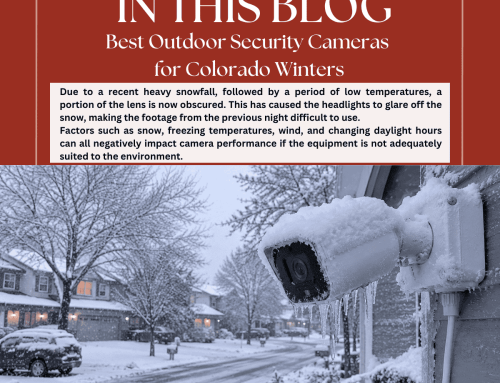
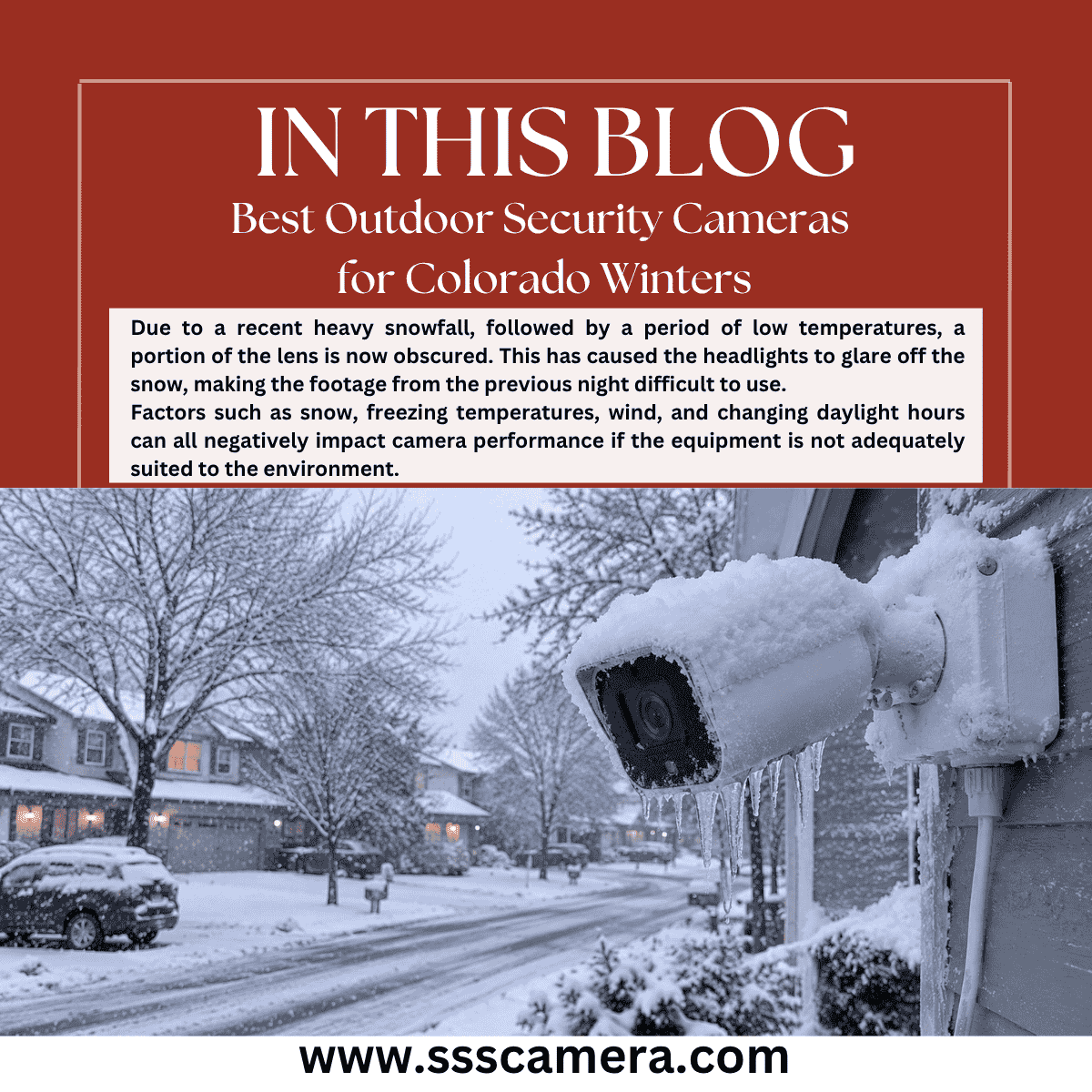
- Weather-rated outdoor cameras built for snow, wind, and temperature swings.
Confirm NDAA-Related Requirements
It is essential to verify the manufacturer and precise model in accordance with the project documentation, and to retain this documentation. Verification must be incorporated within the purchasing file.
The Significance of Geographic Context in the Design of Security Cameras in Colorado, Denver Commercial Properties
Along Colfax Avenue, Federal Boulevard, Broadway, and Speer Boulevard, properties frequently experience significant pedestrian traffic, street parking, and entrances that open directly onto sidewalks. Mixed-use buildings in RiNo and Cherry Creek feature shared entrances and tenant spaces, while properties in proximity to I-25 often strike a balance between vehicle visibility and reflected highway light.
Aurora and Centennial Businesses
Along East Colfax, Havana Street, and Peoria Street, businesses frequently possess larger lots and multiple entrances. In the vicinity of Southlands, Smoky Hill Road, Arapahoe Road, and University Boulevard, suburban layouts characteristically encompass wider parking fields, rear loading areas, and longer perimeters. These layouts demonstrate a clear preference for wide-angle coverage and the utilisation of pan-tilt-zoom (PTZ) cameras.
Colorado Springs and Fort Collins
Along Powers Boulevard and North Academy Boulevard, and in Briargate, retail centres, offices, and dealerships require coverage across large lots. Hospitality properties in proximity to the Broadmoor are characterised by guest-facing areas that demand discreet and high-quality placement. In Fort Collins, Harmony Road and Mulberry Street are notable for their concentration of office and retail premises, while College Avenue and Old Town Fort Collins are distinguished by their blend of historic architecture and vibrant pedestrian precincts.
Boulder, Lakewood, Westminster, Thornton and Other Colorado Communities Around 28th Street and Pearl Street in BoulderThe configuration of storefronts and pedestrian activity in this area is reflected in the camera angles employed. In the vicinity of Wadsworth Boulevard and West Colfax in Lakewood, it is often necessary for strip centers and service businesses to provide parking facilities.
Recent commercial developments have been observed in the areas of US-36 and 92nd Avenue in Westminster and 120th Avenue and Washington Street in Thornton, characterised by larger lots and multiple tenants. In each case, the road is merely a reference point, with the layout of the building and its design being the primary drivers.
What Other Security Systems Should Work With Your Cameras?
A camera system does not have to operate independently. The integration of this system with other security systems has been demonstrated to enhance its overall functionality.
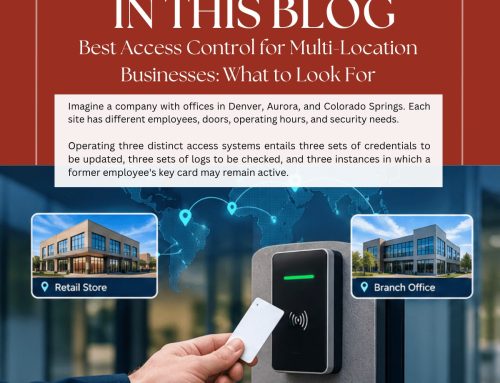
Access Control
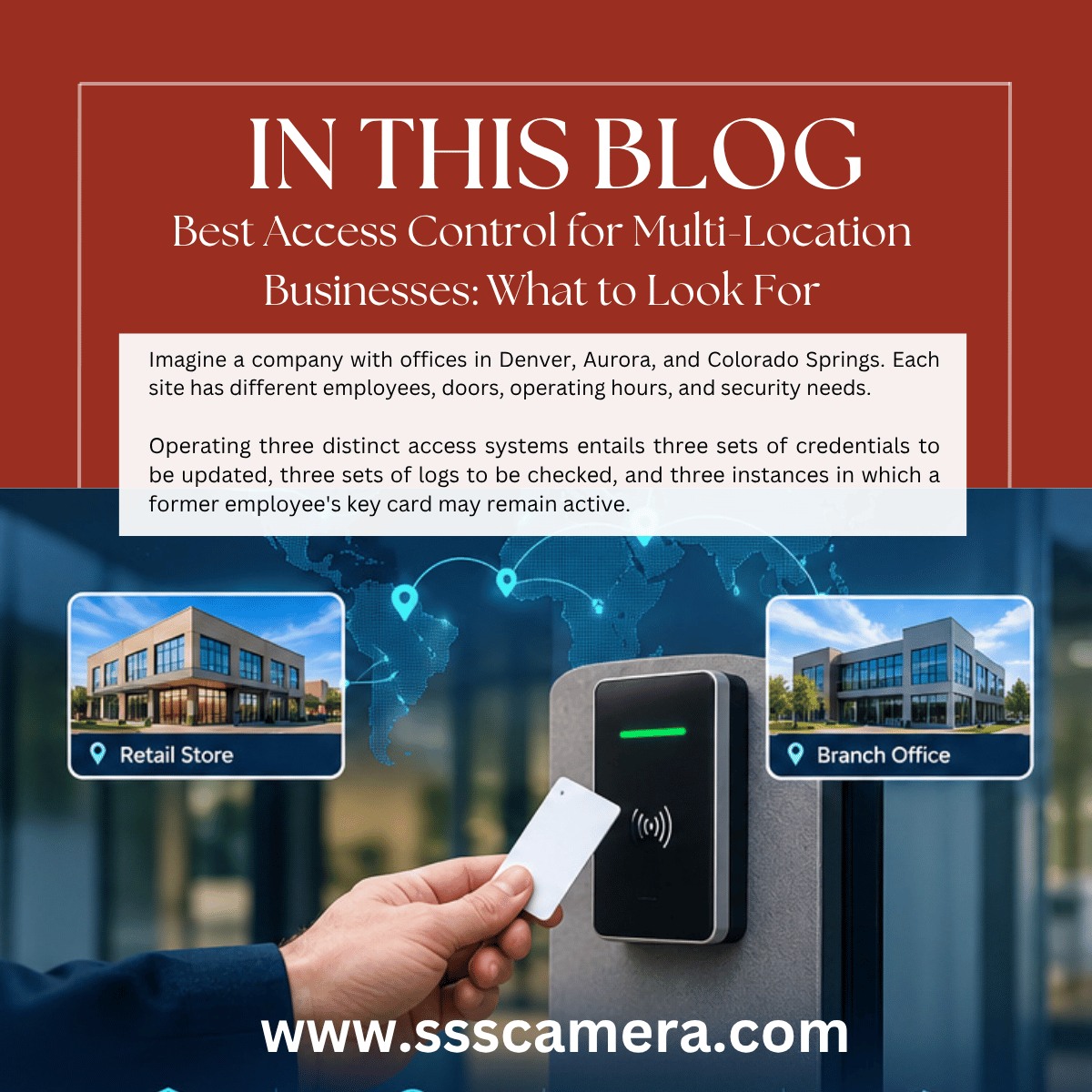
Cameras at controlled entrances facilitate the verification of individuals who have been issued with a badge and the review of incidents related to specific doors.
Burglar Alarms
Video verification enables the observation and subsequent review of the triggering of an alarm.
Intercom Systems
Visual verification of credentials at points of access, such as doors and gates, assists staff in determining the validity of an individual’s request for entry.
Centralized Video Management
A video management system integrates the functions of recording, live monitoring, remote access, and administration. The Security Surveillance System (SSS) is responsible for the design of camera, access control, alarm, and intercom systems, ensuring that they function as an integrated whole.
NDAA Compliance and the Colorado Security Camera Upgrade
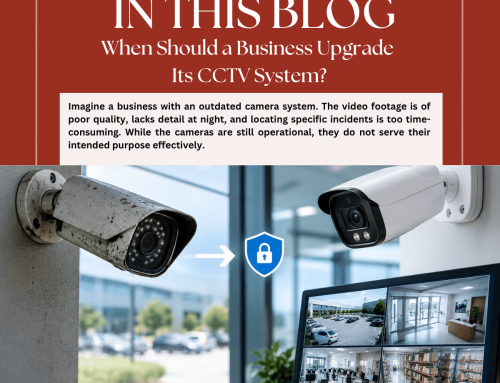
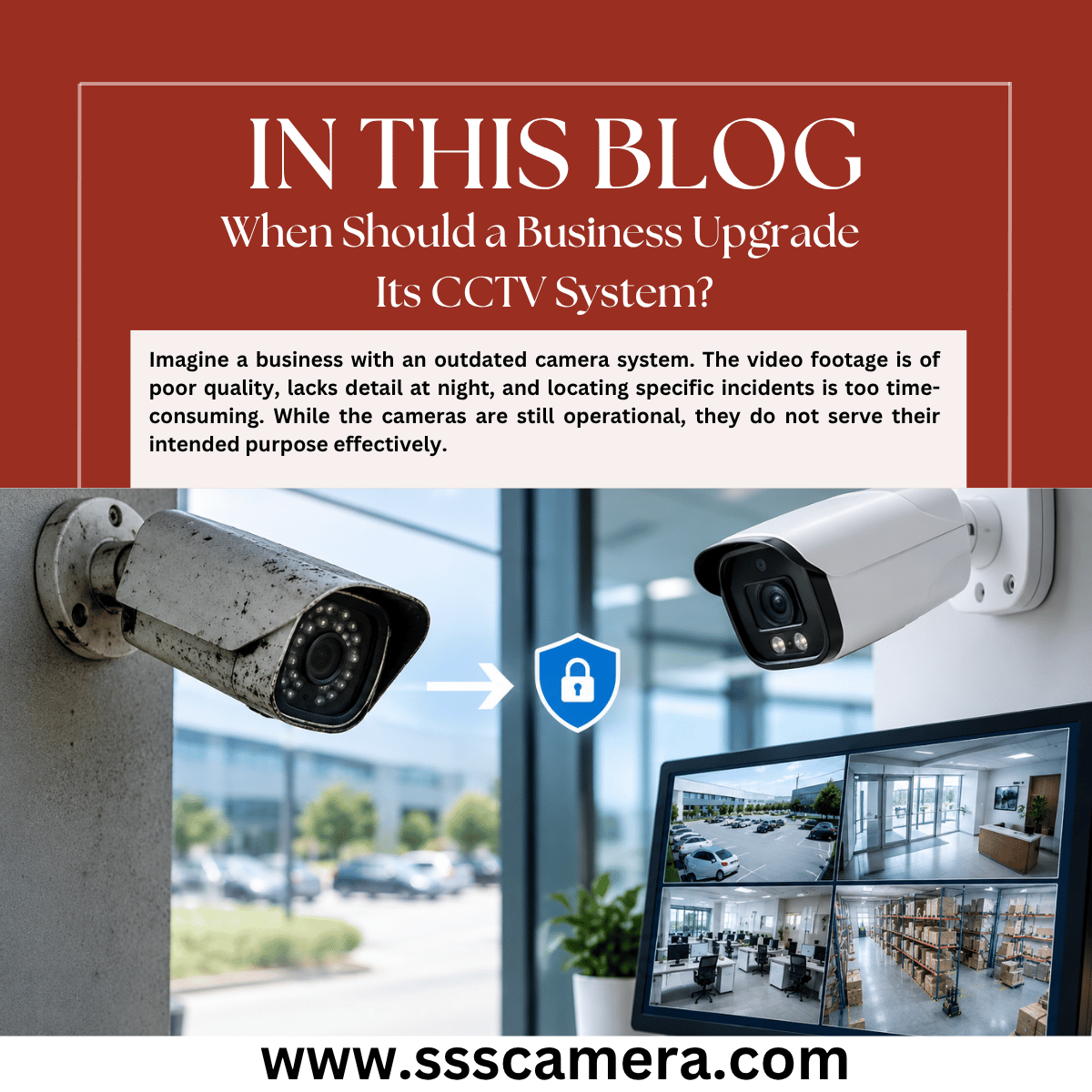
A considerable proportion of upgrades pertain to the replacement of obsolete analog cameras, outdated IP cameras, unsupported recorders, or equipment that no longer aligns with the specifications of a new project.
Can You Replace Only Some Cameras?
Indeed. The implementation of phased upgrades enables the replacement of the highest-priority cameras first, while simultaneously spreading the financial burden over time. It is imperative to ensure that new cameras are compatible with the existing recorder.
Boulder, Lakewood, Westminster, Thornton and Other Colorado Communities Around 28th Street and Pearl Street in Boulder The configuration of storefronts and pedestrian activity in this area is reflected in the camera angles employed. In the vicinity of Wadsworth Boulevard and West Colfax in Lakewood, it is often necessary for strip centers and service businesses to provide parking facilities.
Recent commercial developments have been observed in the areas of US-36 and 92nd Avenue in Westminster and 120th Avenue and Washington Street in Thornton, characterised by larger lots and multiple tenants. In each case, the road is merely a reference point, with the layout of the building and its design being the primary drivers.
What Other Security Systems Should Work With Your Cameras?
A camera system does not have to operate independently. The integration of this system with other security systems has been demonstrated to enhance its overall functionality.
Access Control
Cameras at controlled entrances facilitate the verification of individuals who have been issued a badge and the review of incidents related to specific doors.
Burglar Alarms
Video verification enables the observation and subsequent review of the triggering of an alarm.
Intercom Systems
Visual verification of credentials at points of access, such as doors and gates, assists staff in determining the validity of an individual’s request for entry.
Centralized Video Management
A video management system integrates the functions of recording, live monitoring, remote access, and administration. The Security Surveillance System (SSS) is responsible for the design of camera, access control, alarm, and intercom systems, ensuring that they function as an integrated whole.
NDAA Compliance and the Colorado Security Camera Upgrade
A considerable proportion of upgrades pertain to the replacement of obsolete analog cameras, outdated IP cameras, unsupported recorders, or equipment that no longer aligns with the specifications of a new project.
Can You Replace Only Some Cameras?
Indeed. The implementation of phased upgrades enables the replacement of the highest-priority cameras first, while simultaneously spreading the financial burden over time. It is imperative to ensure that new cameras are compatible with the existing recorder.
What About the NVR and VMS?
Recorders and video management software are of equal importance to cameras. It is imperative to assess compatibility prior to acquisition, as an incompatible recorder may necessitate an earlier full replacement.
Should Businesses Plan for Future Expansion?
Indeed. It is imperative to opt for a platform that offers both spare recording capacity and licensing flexibility. This ensures that the addition of cameras does not necessitate a complete reinstatement of the system.
NDAA Compliance Is Not the Only Camera Specification Colorado Businesses Should Consider
NDAA status says nothing about image quality or reliability. The following aspects should also be given due consideration:
- Resolution and field of view
- Low-light performance and IR night vision
- AI analytics
- Weather resistance
- Storage capacity and retention
- Network bandwidth and requirements
- Cybersecurity practices, including firmware updates and strong credentials
- Remote access
- Integration with other systems
- Scalability
- Installation quality
The state of Colorado is characterised by a diverse range of environmental settings, including urban commercial corridors and mountainous communities. This diversity underscores the significance of these details. Consequently, a camera that demonstrates high performance in a Denver parking lot might encounter issues with snow load and glare at higher altitudes.
NDAA-Compliant Camera Options for Colorado’s Different Environments
Urban Commercial Properties
In urban areas such as Denver, Aurora, Lakewood, and their respective environs, priorities typically encompass such aspects as the identification of entrances, the management of parking, and the regulation of mixed lighting during night-time hours.
Large Commercial and Industrial Properties
In order to fulfil these requirements, warehouses, dealerships, grocery stores and distribution facilities require wide coverage, pan-tilt-zoom (PTZ) cameras for large parking areas and reliable night performance across long perimeters.
Mountain and Resort Properties
In Vail, Breckenridge, Frisco, Dillon, Silverthorne, Evergreen, Winter Park, Aspen, and Snowmass, the design of the ski runs is influenced by a number of factors, including snow, weather exposure, the length of the driveways, parking areas, perimeter coverage, and lighting. The stipulations set out in the NDAA are contingent on the technical specifications of the equipment and the particulars of the project, rather than being determined by geographical location alone. The necessity of compliant cameras is not automatically inherent to mountain properties.
Why Work With a Professional Colorado Security Company?
A professional provider will be responsible for site evaluation, security assessment, camera placement, equipment selection, awareness of NDAA-related project requirements, recording and storage design, network planning, installation, system integration, and ongoing maintenance.
Security Surveillance System is a Colorado-based security provider that caters to businesses across the state. SSS offers NDAA-compliant camera options when a project requires them and designs systems around how each property is actually used.
Frequently Asked Questions About NDAA-Compliant Cameras in Colorado
About Security Surveillance System
Security Surveillance System is a locally owned, licensed security camera company based in Denver, CO. Since 2006, we have installed hundreds of commercial and residential security systems across Colorado, including video surveillance, access control, intercom, and burglar alarm systems, backed by a one-year warranty on all parts and labor for full installations.