NDAA-Compliant Security Cameras for Schools and Educational Facilities
Schools have a number of key areas to consider, including entrances, visitor flow, parking and drop-off zones, equipment rooms, and open grounds. In the event of an incident, clear video footage facilitates a more efficient and accurate review process.
The selection of cameras is a decision that encompasses both operational needs and procurement requirements. It should be noted that NDAA compliance is a consideration for schools and educational projects, where contracts, funding or other requirements stipulate the use of compliant equipment. It is not automatically a universal requirement for every privately operated school or every school camera installation.
What Are NDAA-Compliant Security Cameras?
What NDAA and Section 889 Mean
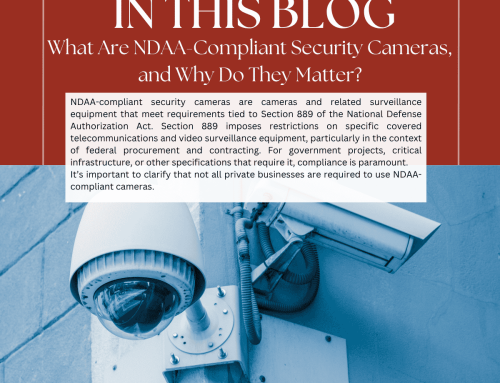
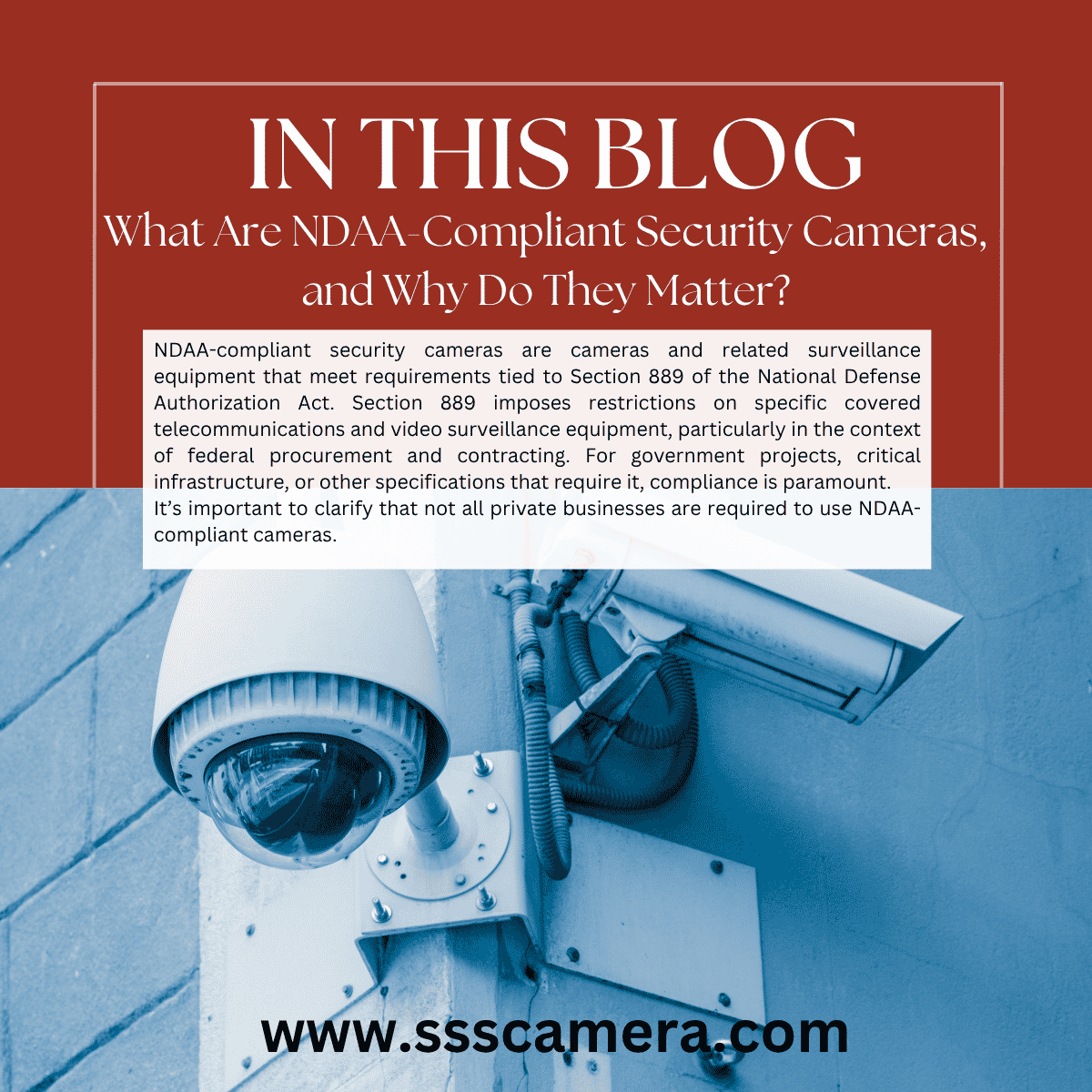
The National Defense Authorization Act (NDAA) is the annual federal defence funding law. Section 889 imposes restrictions on specific covered telecommunications and video surveillance equipment in applicable federal procurement contexts.
Why Schools May Need to Consider Compliance
Project specifications, public procurement rules, government-related funding or contracts, and institutional purchasing policies can all call for compliant equipment.
How to Verify Camera Compliance
Check the specific manufacturer, model, documentation, and applicable project requirements. A generic marketing claim is not enough
Are NDAA-Compliant Cameras Required for Every School?
It should be noted that requirements are dependent on both the type of institution and the nature of the project in question:
- Public school districts: It is often necessary to adhere to procurement regulations that stipulate the use of compliant equipment.
- Private schools: The obligations of the company are contingent upon the availability of funding, the terms of existing contracts, and the implementation of relevant policies.
- Colleges and universities: The viability of any project is dependent on its public status and the availability of funding sources.
- Government-funded projects: Terms of the funding usually spell out requirements.
- Contractors on applicable government projects: Please be aware that there may be contractual obligations involved.
Confirm requirements with your procurement or legal team before selecting equipment.
Where Should Schools Install Security Cameras?
Entrances and Reception Areas
Cameras in this facility support several key functions, including ensuring entry visibility, facilitating visitor procedures, and monitoring access points.
Parking Lots and Drop-Off Zones
Ensure adequate coverage of vehicle movement, student drop-off zones and pedestrian traffic, with positioning that provides unobstructed views.
Hallways and Common Areas
Optimal placement is crucial in ensuring comprehensive coverage, facilitating efficient incident review processes, and maintaining strict confidentiality.
Exterior Grounds and Perimeters
Cover exterior doors, building approaches, athletic facilities, and vulnerable access points.
Equipment Rooms and Restricted Areas
IT rooms, storage spaces, and maintenance areas should be monitored to document authorised access.
What Features Should Schools Look for in Security Cameras?
High-Resolution Video
Higher resolution does add image detail, but placement is also crucial for identification and review.
Low-Light Performance and Night Vision
These features facilitate after-hours monitoring of parking areas, entrances and exterior grounds.
AI-Based Person and Vehicle Detection
Analytics can help to prioritise relevant activity. Performance is contingent on configuration and site conditions.
Weather-Resistant Outdoor Cameras
Given the weather conditions in Colorado, including snow, rain, wind and temperature variations, outdoor ratings are a crucial factor.
Recording, Storage, and Video Management
It should include a plan for retention periods, the capacity of the recording system, authorised access, and how footage is retrieved.
How Can Schools Integrate Cameras With Other Security Systems?
Access Control
Cameras complement controlled entry points and staff credentials.
Intercom Systems
Visual verification is a vital tool for staff to use when screening visitors at reception areas, gates and designated entrances.
Burglar Alarms
Alarms and video footage provide complementary information during security events.
Integration is contingent on equipment compatibility and the school’s operational requirements.
What factors should Colorado schools take into consideration when planning surveillance?
Campuses in Denver, Aurora, Boulder, Colorado Springs, Fort Collins, and other Colorado communities vary widely. Schools in proximity to Colfax Avenue and Federal Boulevard in Denver, Havana Street and Smoky Hill Road in Aurora, 28th Street and Baseline Road in Boulder, Powers Boulevard in Colorado Springs, and Harmony Road in Fort Collins each have their own traffic flow, entrances, parking layouts, and outdoor areas. These roads are geographic reference points and do not suggest that any school there faces greater risk.
Colorado weather is also a relevant factor. Seasonal changes in daylight can impact evening coverage, and snow exposure can hinder or compromise exterior views. It is advisable to plan for cameras that remain operational throughout the winter months.
Privacy and the Responsible Placement of Cameras in Educational Facilities
- Restrict cameras to appropriate areas.
- Avoid cameras in bathrooms and other areas where privacy is expected.
- Limit access to recordings.
- Set retention and footage-review policies.
- Follow applicable student privacy rules and school policies.
- Communicate surveillance practices appropriately.
Security goals should be balanced with privacy, safeguarding, and applicable legal obligations.
What is the cost of a school security camera system?
The cost will depend on:
- Campus size and number of buildings
- Number and type of cameras
- Interior and exterior coverage
- Recording and storage needs
- Network infrastructure Integration with access control or intercom systems
- Installation complexity
- Maintenance and future expansion
A site assessment provides a more accurate estimate than a generic figure.
How Can Security Surveillance System Help Schools Choose the Right Cameras?
Security Surveillance System is a Colorado-based security provider offering surveillance solutions and NDAA-compliant camera options when required by a project. The process covers:
- A review of the campus layout and security objectives is underway.
- The identification of entrances, exterior areas, and coverage gaps is a key part of the process.
- The evaluation process involves a thorough analysis of camera specifications and the identification of applicable NDAA-related requirements.
- The planning process encompasses recording, storage, and integrations.
- The next step is to install and test the system.
SSS assists with the selection and installation of equipment, but does not certify a school’s compliance with every procurement or legal requirement. The institution and its advisors will retain ultimate responsibility.
Frequently Asked Questions
What are NDAA-compliant security cameras for schools?
These cameras are designed to comply with Section 889 of the National Defense Authorization Act, which pertains to the procurement of certain video surveillance equipment in federal contexts.
Are NDAA-compliant cameras required for public schools?
The viability of this option depends on the relevant procurement rules, contracts, funding and project specifications.
Are private schools required to use NDAA-compliant cameras?
The feasibility of this option depends on the specific project and any obligations tied to funding or contracts.
How can a school verify whether a camera is NDAA-compliant?
Check the manufacturer and model, request documentation, and review it with your procurement team.
What is the optimum placement for security cameras on a school campus?
These are typically located at entrances, parking areas, hallways, exterior grounds, and restricted areas, with strict adherence to privacy regulations.
Can school cameras integrate with access control and intercom systems?
Yes, with compatible equipment. Integration facilitates coordinated security management.
Can NDAA-compliant cameras be used outdoors in Colorado?
Yes, NDAA status and outdoor performance are separate criteria. It is imperative to verify both compliance requirements and environmental specifications.
Does Security Surveillance System offer NDAA-compliant cameras for educational facilities?
Yes, SSS can provide camera options that are NDAA-compliant when required. Should you have any questions or require further information, please do not hesitate to contact us.
Conclusion: Selecting school security cameras with confidence
It is essential to understand the applicable NDAA-related requirements, select cameras suited to your campus, plan appropriate coverage and recording, balance security with privacy, account for Colorado’s weather and site conditions, and work with a qualified security provider.
Discuss Educational Security Camera Options With SSS
School administrators, facility managers, and educational institutions across Colorado are invited to contact Security Surveillance System about professional surveillance design, camera upgrades, integrated security systems and NDAA-compliant camera options when required. Can NDAA-compliant cameras be used outdoors in Colorado?