Wired vs Wireless Security Cameras for Colorado Businesses
When planning or upgrading video surveillance systems, one of the first decisions that a business in Colorado faces is whether to choose wired or wireless security cameras. Both options can provide effective monitoring, but there are important differences to consider, including installation, connectivity, reliability, and maintenance requirements. The best choice depends on factors such as the property layout, network infrastructure, security objectives, and long-term plans. Whether you operate a shop in Denver, a warehouse in Aurora, an office in Colorado Springs, or a storefront in Fort Collins, understanding these differences will help you invest in a system that performs effectively when it matters most.
What Is the Difference Between Wired and Wireless Security Cameras?
Wired cameras send video over physical cabling, while wireless cameras send video over Wi-Fi or another wireless network. The importance of detail cannot be overstated, so please find below a description of each.
How Do Wired Security Cameras Work?
Wired cameras transmit video through physical cables, most commonly Ethernet. PoE security cameras utilize power over Ethernet, a technology that facilitates the transmission of both power and data through a single cable. This feature simplifies the installation process, as the camera does not require a separate power outlet. Wired systems generally connect to a network video recorder (NVR) or video management system that records and organizes footage. Due to their design, they are particularly well-suited for permanent commercial installations.
How Do Wireless Security Cameras Work?
Wireless cameras generally send video footage over Wi-Fi or another wireless network. It is important to note that the term ‘wireless’ does not always imply ‘wire-free’ since many models still require a power connection. Battery-powered models eliminate the need for power cabling but necessitate recharging or battery replacement. Wireless cameras are particularly useful in situations where running data cabling is difficult.
What are the key benefits of wired security cameras for businesses?
Wired security cameras for businesses offer stable connectivity, centralized power and recording, and practical scalability for larger sites.
More Consistent Network Connectivity
A physical connection can help to reduce reliance on the strength of the Wi-Fi signal. Ensuring consistency is paramount in areas such as entrances, checkout areas, loading docks, and parking lots. In these locations, any gaps in video footage can potentially result in the loss of crucial footage.
Centralized Power and Recording
Power and recording are managed from a central point when PoE is used in conjunction with an NVR or a compatible video management platform. A professional system design can simplify power and recording management over time.
Better Suitability for Larger Commercial Properties
Wired systems are particularly well-suited to warehouse, retail, office, and multi-building properties. Consider the large commercial sites located along I-25 in Denver or the industrial areas in Commerce City, where the distance and size of buildings necessitate dependable cabling as a foundation.
When are wireless security cameras a better option?
Wireless security cameras are ideal for businesses where cabling is impractical and the network can support them.
Locations Where Cabling Is Difficult
Wireless connectivity can be a valuable solution for detached structures, temporary locations, or areas where running cable is disruptive or expensive. Examples of such locations include remote sections of a commercial property and certain outdoor locations.
Flexible Installation and Expansion
When network infrastructure and signal conditions permit, wireless cameras can facilitate the addition of coverage. These systems are well-suited to temporary monitoring requirements and smaller business locations.
Understanding Wireless Limitations
Wireless performance is dependent on various factors, including Wi-Fi coverage, interference, bandwidth, network congestion, and power availability. It is imperative to assess the site’s network conditions before selecting a wireless camera.
Which Security Camera System Performs Better in Colorado’s Conditions?
It is clear that neither type is universally applicable. The system’s performance depends on how well it is suited to the site and the local climate.
Outdoor Camera Placement and Weather Exposure
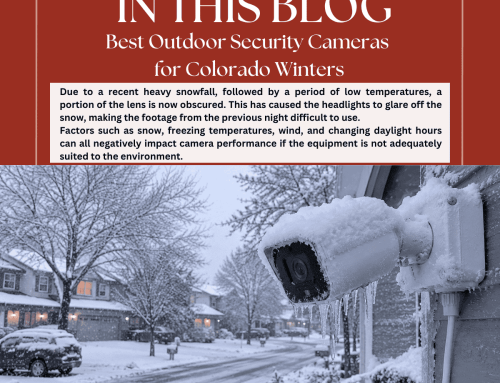
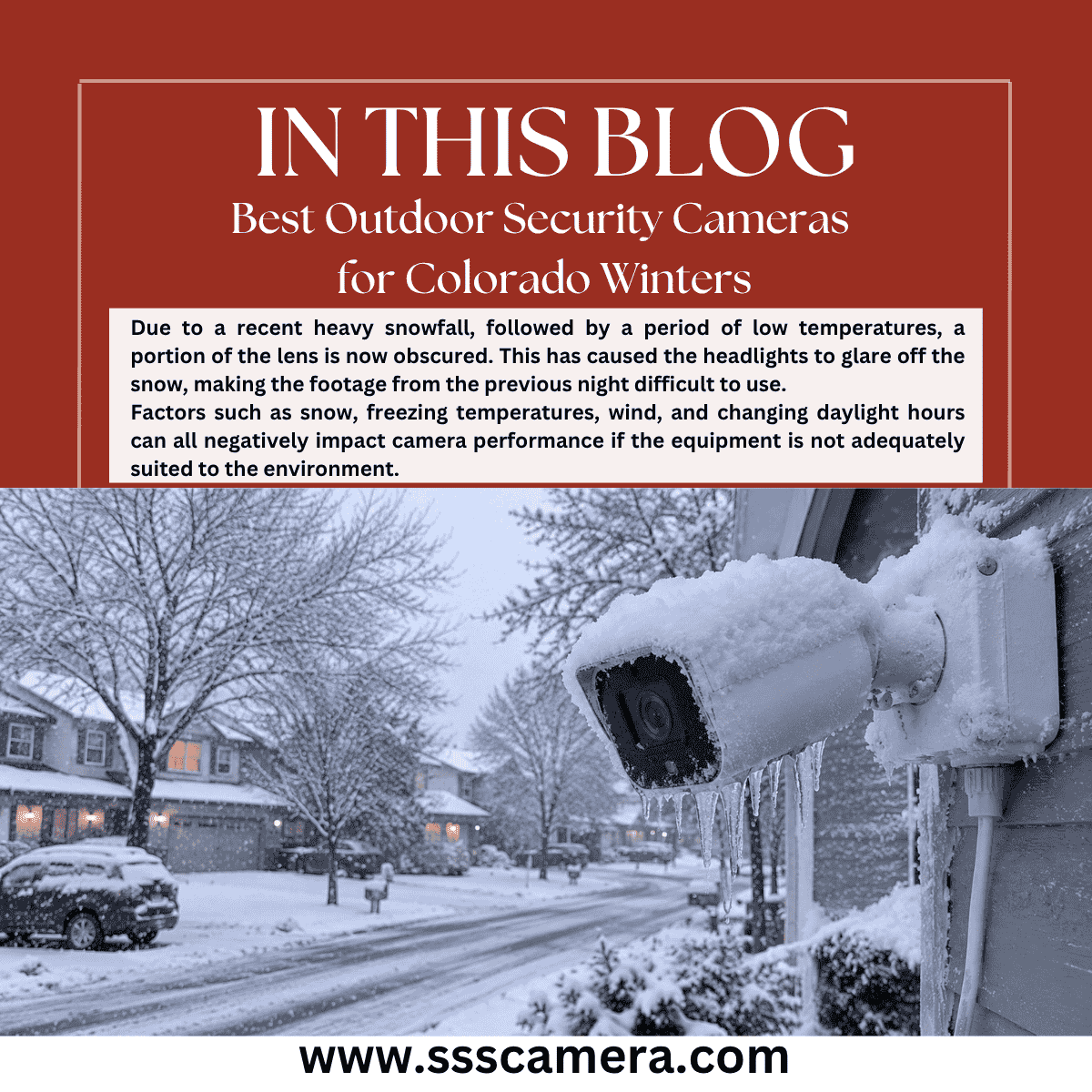
It is crucial that outdoor equipment is weather-rated, securely mounted, and installed by professionals. Factors such as snow, wind, temperature fluctuations, and the routing of exposed cables can all influence the planning of the installation. Therefore, it is important to take these considerations into account before installing the cameras.
Commercial Properties Across Colorado
A property located in close proximity to a heavily trafficked road or comprising multiple buildings, such as a lot in Aurora or a retail centre in Lakewood, may have significantly divergent connectivity and coverage requirements compared to a small office in Boulder. Mountain communities present their own challenges, including distance, terrain and weather exposure. A site-specific plan is preferable to a one-size-fits-all approach.
Wired vs. Wireless Security Cameras: What should businesses consider before selection?
Prior to making a decision, it is advisable to compare the cost, video performance, cybersecurity, and any compliance requirements.
Installation Costs and Existing Infrastructure
When comparing these options, it is important to consider key factors such as cabling, labour, network upgrades, mounting, and power requirements. The initial cost-effectiveness of a system should not be the sole determining factor in the decision-making process. It is also important to consider the reliability and maintenance requirements of the system when making a selection.
Video Quality, Bandwidth, and Storage
Factors such as resolution, frame rate, recording schedules, network capacity, and storage all have a direct impact on performance. It is essential that both wired and wireless systems are designed in accordance with network and recording specifications to ensure the delivery of clear, usable footage.
Cybersecurity and System Management
It is imperative to use strong passwords, keep firmware updated, segment the network where appropriate, limit authorized access, and control remote viewing. Wireless systems require particular attention to Wi-Fi security, while wired IP systems also require network protection.
NDAA Considerations for Commercial Projects
Certain federal procurement and contracting requirements restrict specified telecommunications and video surveillance equipment. Please note that these NDAA-related requirements do not automatically apply to every private business. The Security Surveillance System offers NDAA-compliant camera options for projects where applicable requirements call for them. It is advisable to verify specific camera models and project requirements rather than relying on brand-level assumptions.
Which Security Camera Brands and Systems Does SSS Provide?
Security Surveillance System is pleased to provide commercial video surveillance solutions from the following brands:
- Uniview
- Digital Watchdog (DW)
- Exacq
- LTS
- Hanwha Vision
The appropriate equipment depends on the property’s coverage, recording, integration, and operational needs. Please note that features and compliance status can vary by model, so SSS reviews the specifics of each project rather than assuming every product is identical.
How can Colorado businesses choose the right camera installation?
Start by evaluating the property before choosing wired, wireless, or a hybrid system. Please take into consideration entrances, parking areas, building perimeters, inventory areas, and locations where network coverage is limited. In many cases, a combination of wired and wireless cameras is the most effective solution: utilizing wired cameras for primary coverage and wireless cameras for difficult-to-reach areas. SSS offers a complimentary on-site review and a bespoke, budget-based system design for businesses across Denver, Aurora, Colorado Springs, and the Colorado Front Range.
Frequently Asked Questions
-
Are wired security cameras more reliable than wireless cameras?
Wired cameras often provide steadier connectivity because they do not rely on the strength of the Wi-Fi signal. Reliability is still dependent on factors such as the quality of installation, the equipment used, and the network design.
-
Do wireless security cameras need an internet connection?
In order to facilitate communication, a local network is required, though not necessarily an internet connection. Internet access is typically a prerequisite for remote viewing and cloud-based services.
-
Are wireless cameras suitable for large commercial properties?
While this is possible, factors such as coverage, Wi-Fi capacity, interference, and power must be thoroughly assessed. Many large sites are better suited to a hybrid system.
-
Do wired security cameras work during an internet outage?
In many cases, this is indeed the case. Local recording can continue in the absence of an internet connection, contingent on system configuration and power availability.
-
Are wireless security cameras easier to install?
While they may reduce the need for data cabling, there are still essential requirements for suitable power, network coverage, mounting, and configuration.
-
Which security cameras are better for outdoor business locations in Colorado?
We recommend selecting weather-rated cameras that boast strong low-light performance, professional installation, and reliable connectivity at the camera location.
-
Can businesses combine wired and wireless security cameras?
Yes. A hybrid system can address different building layouts and coverage needs within one property.
-
Does SSS offer NDAA-compliant security cameras?
Yes, SSS can offer NDAA-compliant camera options for projects that meet the relevant requirements. Businesses are advised to verify specific models and project specifications.
Conclusion
There are clear advantages to both wired and wireless security cameras. The optimal choice depends on various factors, including the nature of your property, the configuration of your network, your security objectives, and your future expansion plans. A professional assessment can help you avoid costly mistakes and ensure that the system is tailored to your specific needs.
Call to Action
Are you ready to find the right camera solution for your Colorado business? Contact Security Surveillance System for a free on-site review and a customized commercial security camera solution.
About Security Surveillance System
Security Surveillance System is a locally owned, licensed security camera company based in Denver, CO. Since 2006, we have installed hundreds of commercial and residential security systems across Colorado, including video surveillance, access control, intercom, and burglar alarm systems, backed by a one-year warranty on all parts and labor for full installations.