Access Control in Security: Methods, Best Practices, and Modern Solutions
Businesses and property owners can no longer rely solely on conventional locks and keys due to the increasing sophistication of security threats. Access control systems, which provide improved visibility, control, and accountability over who enters an area and when, are now an essential part of contemporary security.
Access control is not handled as a stand-alone product at Security Surveillance System; rather, it is a component of an all-encompassing security plan that works in unison with intercom systems, alarms, and security cameras. The proper access control system enhances efficiency, safety, and peace of mind, whether you oversee an office, warehouse, commercial facility, or multi-tenant property.
What Is Access Control in Security?
Access control is a security technique that controls who can enter and leave buildings, rooms, or restricted areas. Modern systems employ electronic credentials like these in place of physical keys:
- Key fobs or cards
- Keypads or PIN codes
- Credentials for a mobile phone
- Cloud-managed permissions
- Entry verification by video and intercom
Since each access attempt is recorded, administrators and property owners can keep an eye on activities, prevent unwanted access, and keep accurate records.
Given the prevalence of remote management, contractors, and employee churn in today’s business contexts, this degree of control is particularly crucial.
The Significance of Access Control in Modern Security
1. Eliminates the risks of traditional keys.
Keys may be misplaced, duplicated, or never given back. Without altering locks or rekeying doors, access control systems enable instantaneous activation or revocation of credentials.
2. Enhances Responsibility
A timestamp and the user’s identification are recorded for each access occurrence. This establishes an audit trail that facilitates internal accountability, compliance obligations, and investigations.
3. Makes Remote Management Possible
Administrators may control doors, users, and permissions from any location with cloud-based access control. Property managers and companies with multiple locations can particularly benefit from this.
4. Closes Security and Liability Gaps
Businesses lower the risk of theft, damage, and unlawful entrance by limiting access to sensitive locations, safeguarding both people and property.
Common Access Control Methods
Systems for controlling access can be modified to suit various settings. The most popular techniques in contemporary security installations are listed below.
Key Fob and Key Card Systems
These are typical in business settings and office buildings. Issuing credentials is simple, and if they are lost or stolen, they can be canceled right away.
PIN Access and Keypad
An affordable option for secondary entrance points or small companies. PIN codes do away with physical credentials, but they should be updated frequently for security.
Mobile Credentials
With smartphone-based access, customers can use safe mobile apps to unlock doors. This approach is growing in popularity for contemporary homes and businesses.
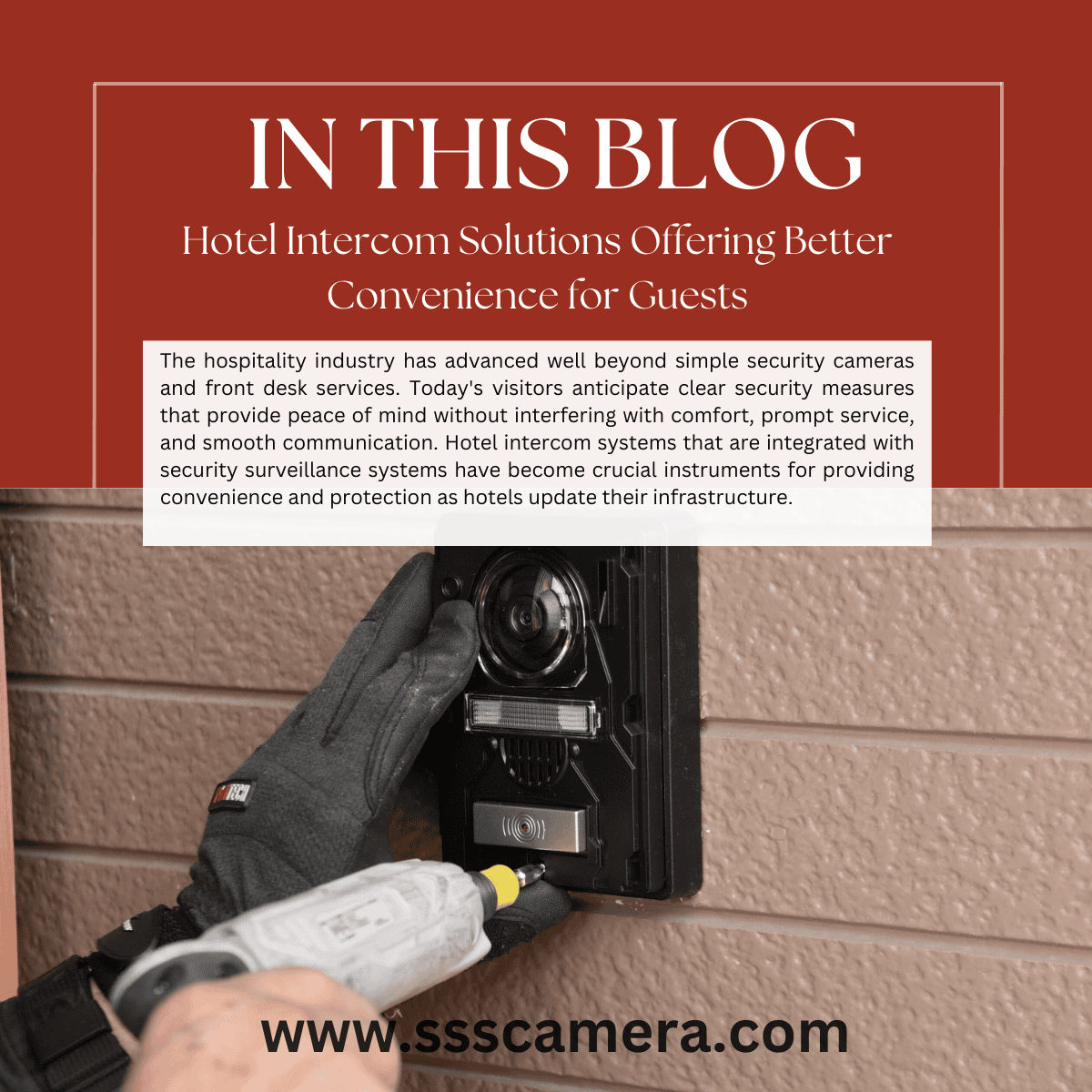
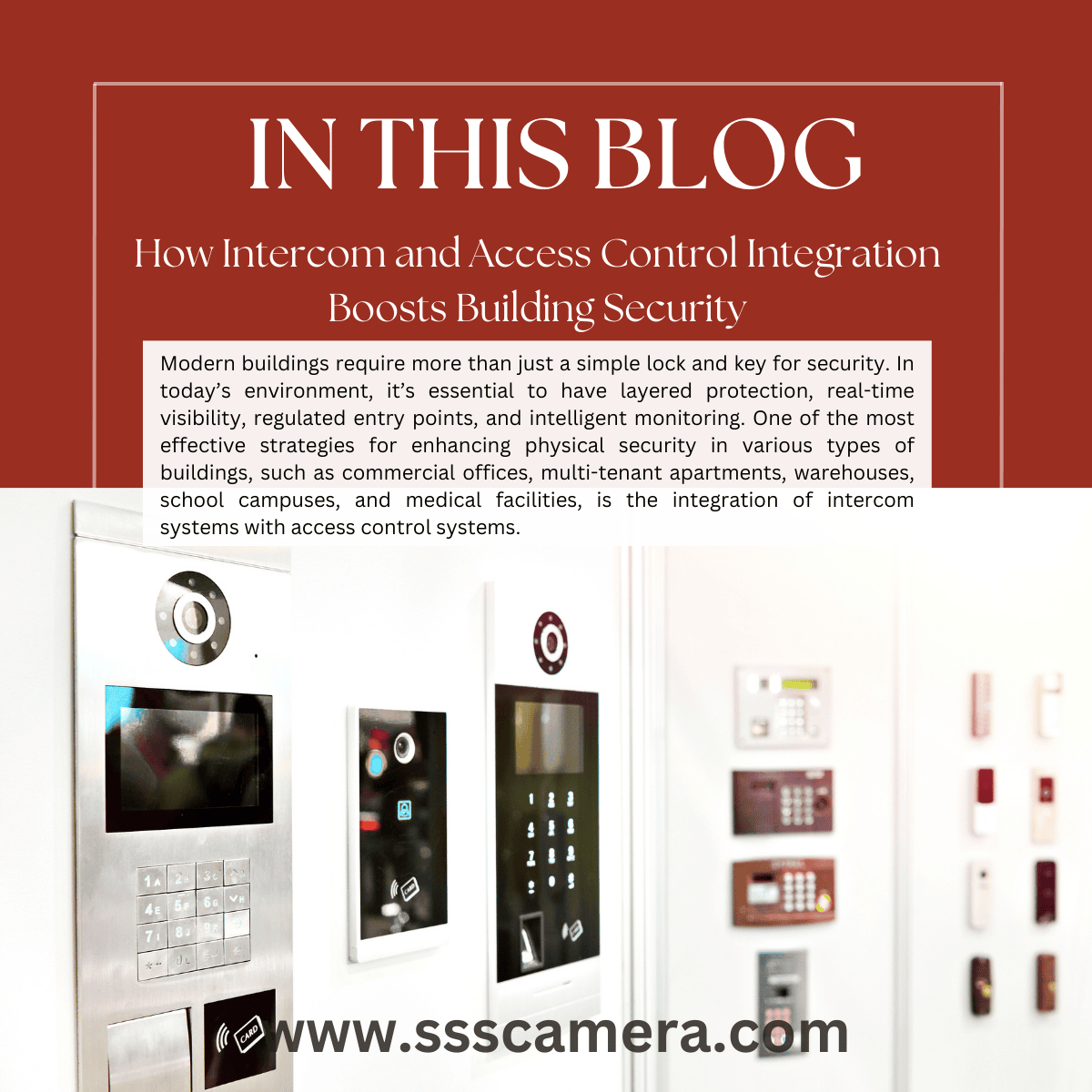
Entry Systems Based on Intercoms
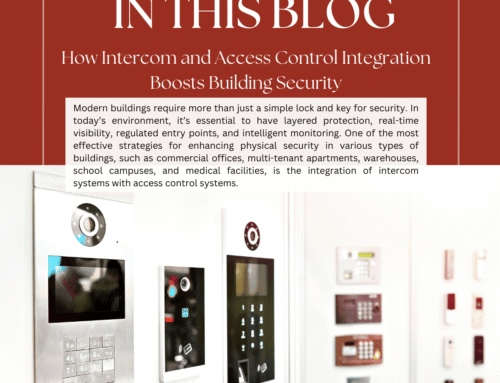
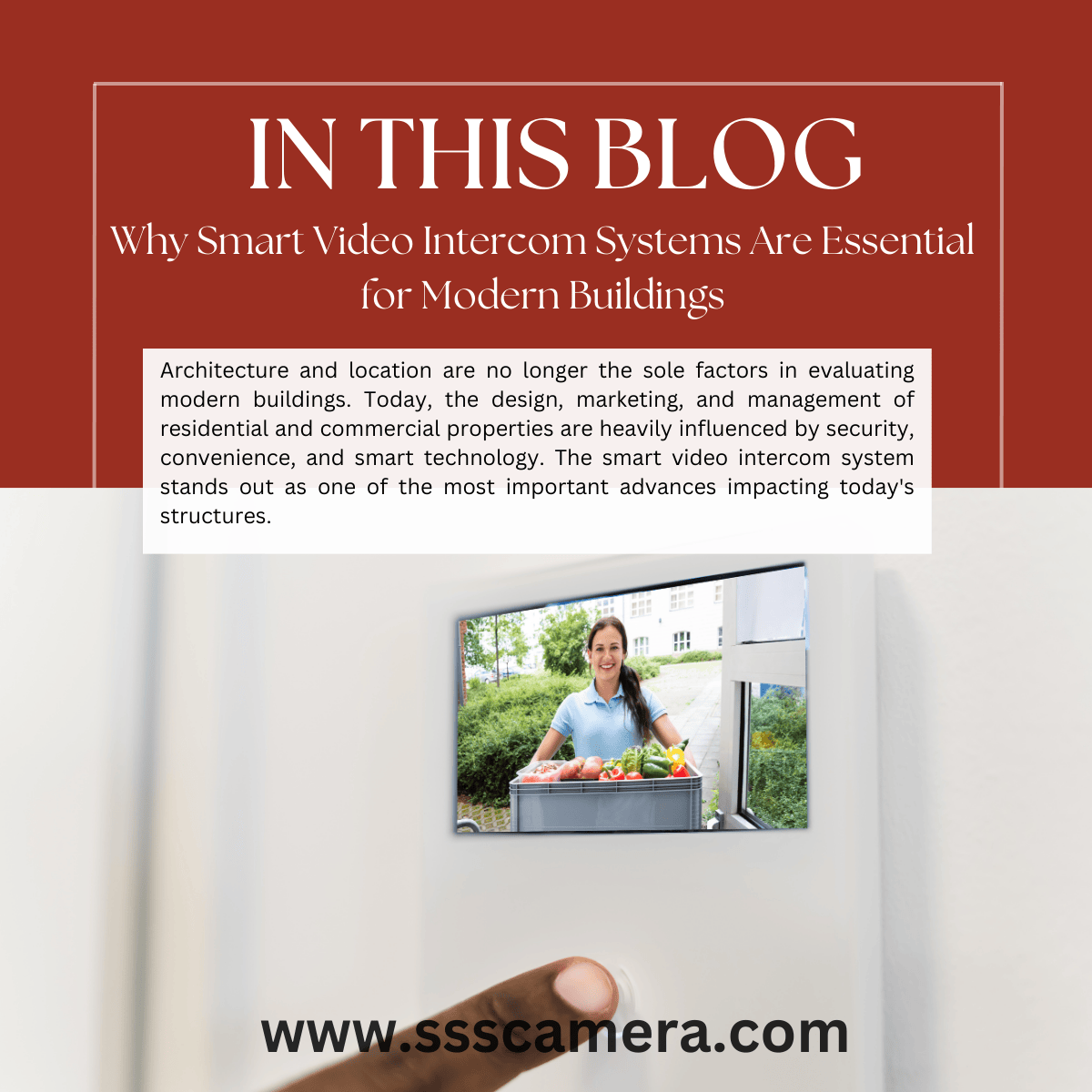
Before allowing entry, users can visually verify guests via video intercom access. This is particularly helpful for controlled access points and multi-tenant buildings.
Cloud-Based Access Management
Cloud systems are perfect for companies looking to expand in the future since they enable centralized management, automatic updates, and scalable growth.
Cloud Access Control’s Function in Modern Security
The management of access control systems has changed as a result of cloud technologies. Cloud-based solutions, as opposed to on-site servers, enable:
- Management of credentials remotely
- Alerts for real-time access
- Controlling several sites from a single dashboard
- Software updates that happen automatically
- Simpler scalability of the system
Due to this change, cloud access control is now a preferred option for many enterprises because it lowers maintenance costs and increases system stability.
Installing Access Control Brands with us
Security Surveillance System installs and supports reputable, scalable, and dependable access control brands. These systems are chosen to satisfy the requirements of multi-tenant, commercial, and residential settings.
ButterflyMX Access Control Systems
For modern buildings, ButterflyMX is a cloud-based smart access and intercom system. In addition to offering video calling, remote access, and secure guest entrance, it enables customers to control entry via cellphones.
ButterflyMX is ideal for:
- Residential buildings with many tenants
- Business establishments
- Gated properties
- Modern property management
Its cloud architecture makes it simple to retain a professional entry experience while managing access remotely.
Brivo Access Control Systems
Businesses that need flexibility, scalability, and sophisticated reporting utilize Brivo, a top cloud-based access control software.
Brivo systems support:
- Credentials based on cards and mobile devices
- Cloud administration that is centralized
- Combining video monitoring with
- Access control across many locations
Brivo is frequently utilized in workplaces, shops, warehouses, and corporate settings where operational effectiveness and security are crucial.
ICT (Integrated Control Technology) Access Control
ICT offers strong access control options for business and corporate security. These systems include robust integration capabilities and sophisticated setup choices.
ICT access control works well for:
- Industrial facilities and warehouses
- Big business structures
- Environments with high security
- Multi-door and multi-site installations
Because of its versatility, Security Surveillance System can create unique access plans that are tailored to the particular requirements of each client.
Integrating Surveillance Systems with Access Control
The ability of modern access control to work with video security cameras is one of its greatest benefits.
When combined:
- Cameras automatically capture entering events.
- Access attempts can be visually verified by security staff.
- It is simpler to look into suspicious conduct.
- Accuracy and speed of incident response increase
Instead of separate devices operating individually, this integration produces an entire security ecosystem.
Best Practices for Access Control Implementation
Strategic implementation of access control is necessary to optimize security and system performance.
Clearly Define Access Levels
Access to every location is not necessary for everyone. Role-based permissions aid in risk reduction and exposure limitation.
Use Multi-Layer Security
Overall security is strengthened by combining access control with cameras, alarms, and intercoms.
Inspect Access Logs Frequently
Frequent audits guarantee that permissions are current and assist in spotting anomalous activity.
Plan for Growth
Select solutions that make it simple to add more doors, users, and locations.
Work with Professional Installers
Reliability, compliance, and long-term performance are guaranteed by proper system design and implementation.
Industries That Benefit Most from Access Control
Numerous industries employ access control systems, such as:
- Business establishments
- Retail establishments
- Logistics centers and warehouses
- Professional and healthcare structures
- Residential properties with many tenants
- Educational establishments
Integrated security monitoring and personalized access rules are advantageous for every setting.
Frequently Asked Questions
Q1. What distinguishes conventional locks from access control?
While access control uses digital credentials that can be remotely managed, tracked, and revoked, traditional locks rely on physical keys.
Q2. Do access control systems function when there is a power outage?
Indeed. To ensure security during outages, the majority of systems have fail-safe setups and battery backups.
Q3. Is cloud-based access control safe?
Cloud systems frequently offer more protection than local servers because they use secure data centers and encrypted connections.
Q4. Can security cameras be integrated with access control?
Indeed. For improved visibility and investigations, integration enables access to events connected with video footage.
Q5. How frequently should access permissions be examined?
Permissions should be evaluated regularly and right away following security incidents or staffing changes.
Why You Must Install Security Surveillance Systems for Access Control
Since 2006, Security Surveillance System has been at the forefront of expert security solutions. We refuse to settle for one-size-fits-all installations; instead, we deliver customized systems that are meticulously designed to meet your specific needs.
What Sets SSS Apart?
- Unmatched expertise in both residential and commercial security
- Professional installation of cutting-edge access control systems
- Seamless integration with intercoms, alarms, and surveillance technology
- Scalable systems that expand seamlessly as your organization grows
- Comprehensive maintenance and support that you can rely on
From the very first consultation to the final installation, we ensure your access control system fully aligns with your security objectives.
To conclude: Access control is not a luxury; it is a necessity in today’s security landscape. It delivers enhanced safety, greater visibility, and improved operational control through advanced cloud-based management, integrated surveillance, and smart entry systems.
Take charge of your security today. Whether you’re initiating a new security installation or upgrading an existing system, Security Surveillance System provides access control solutions that tackle modern security challenges head-on.