Custom Security Plans for Every Colorado Industry
A restaurant on Colfax Avenue doesn’t face the same security requirements as a warehouse near I-25. Veterinary hospitals and automobile dealerships are two different types of business with different access requirements. A solid security strategy begins with a comprehensive understanding of the industry, the property, the employees, the customers, the assets, the operating hours, the entry points, the outdoor areas, and the specific risks they present.
Security Surveillance System designs custom security systems in Colorado, tailoring solutions to specific needs rather than offering a one-size-fits-all approach.
Why Doesn’t One Security System Work for Every Colorado Business?
Generic packages tend to prioritize convenience over protection. This can result in loading docks, side entrances and back lots remaining uncovered, while a lobby is equipped with three cameras.
Every Property Has a Different Layout
The number of entrances, the size of the building, the parking areas, outdoor space, interior zones, and whether a site has multiple buildings all shape the design. A single-tenant office near Southlands in Aurora is a very different project from a multi-building campus.
Every Industry Has Different Security Priorities
- Retail: Theft prevention and customer safety
- Apartments: Management of access and shared spaces
- Schools: Controlled entry
- Auto dealerships: Vehicle lots and perimeter security
- Veterinary hospitals: Restricted clinical areas
- Hotels: Areas designated for guests and staff
- Restaurants: Entrances, dining areas, kitchens, and deliveries
Colorado Properties Face Different Operating Conditions
Each property type (urban, suburban, mountain, commercial, and mixed-use) presents different conditions. A storefront in LoDo faces different foot traffic and lighting than a warehouse along E-470 or a lodge in the foothills.
What Should a Custom Colorado Security Plan Include?
Most plans draw from four core service categories, which are combined as the property requires.
Video Surveillance
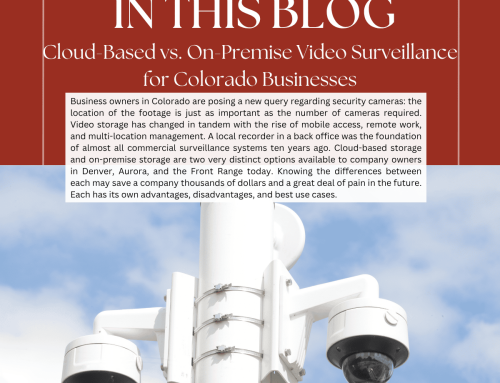
Features such as indoor and outdoor cameras, 4K resolution, night vision, AI analytics, pan-tilt-zoom cameras, and remote viewing enable owners to monitor and review their premises with video surveillance.
Access Control
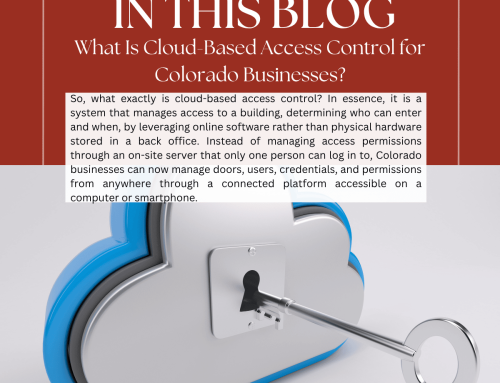
Key cards, key fobs, mobile credentials, and biometric options are used to manage who enters. Restricting staff movement to designated areas is made possible by door permissions and employee access control schedules.
Burglar Alarms
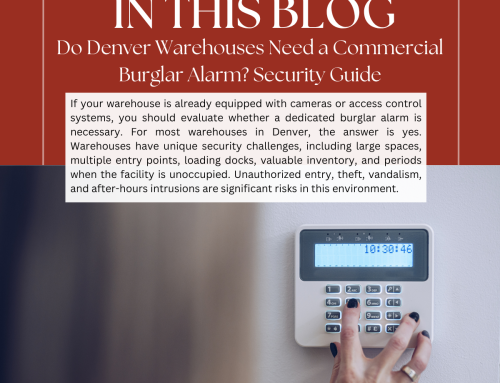
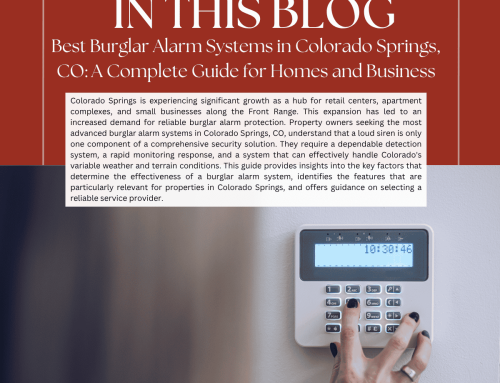
Door contacts, motion detection, glass-break detection, and intrusion detection provide after-hours protection when no one is on site. Burglar alarms add a layer of detection that cameras alone do not provide.
Intercom Systems
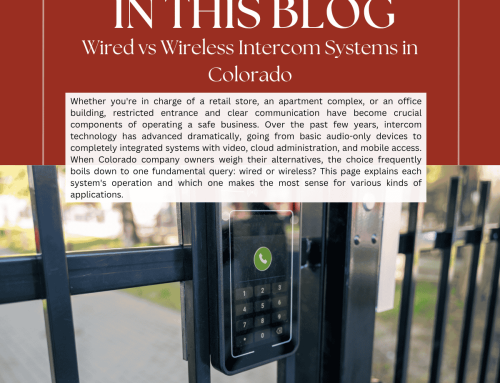
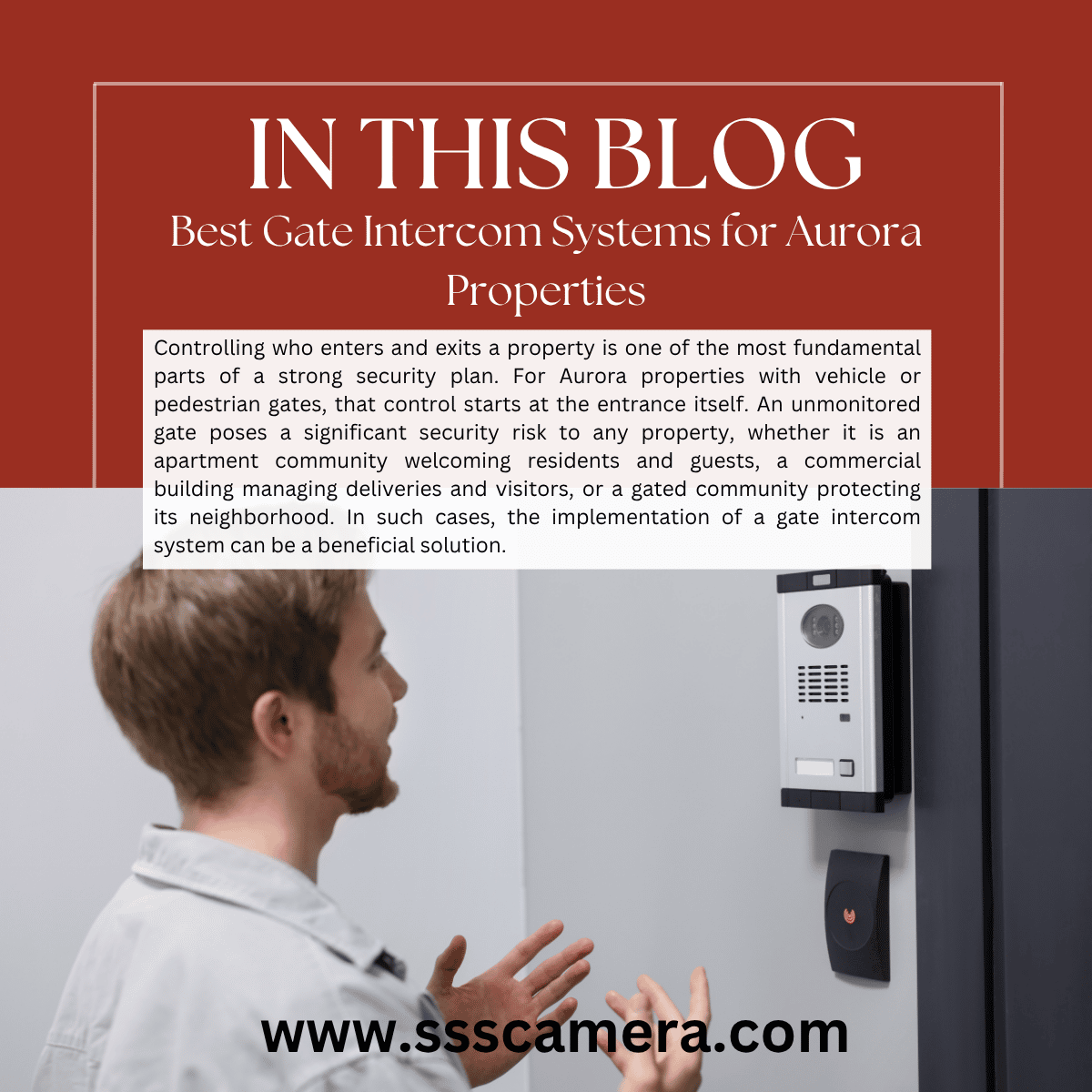
Intercom systems at building entrances, apartment properties, gates and offices allow visitor verification before anyone is let in.
How Do Security Needs Change by Industry?
This is where customization becomes concrete.
Apartment and Condo Communities
It is imperative that attention be paid to building entrances, parking areas, package areas, gates, common spaces, and resident access. A multi-family property near Wadsworth Boulevard in Lakewood may require a different combination of security features, including cameras, access control systems, and intercoms, compared to a smaller property located near Pearl Street in Boulder.
Grocery and Retail Stores
It is important to note that entrances, checkout areas, high-value merchandise, stockrooms, parking areas and employee entrances each present different risks. Retail corridors around East Colfax in Aurora and Federal Boulevard in Denver experience high customer footfall and busy parking lots, which are critical factors in determining camera placement for grocery stores and retailers.
Automotive Dealerships
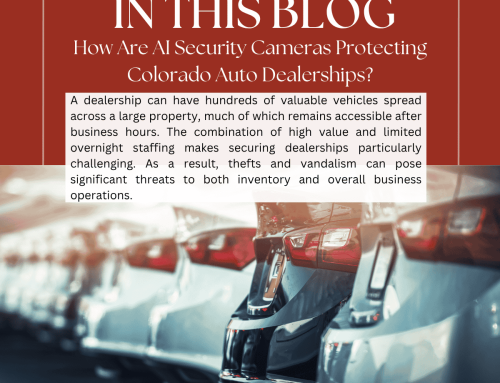
Vehicle inventory, perimeter fencing, gates, showrooms, and service departments all require coverage, as well as after-hours monitoring. Dealerships located along Powers Boulevard and Academy Boulevard in Colorado Springs frequently oversee large open lots, where ensuring optimal visibility around the perimeter and gates is paramount.
Veterinary Hospitals
Treatment rooms, staff-only areas, medication storage, kennels, employee entrances, and administrative spaces in veterinary hospitals each require their own level of access and coverage.
Schools and Nonprofits
The plan’s core components for schools and nonprofits include the main entrances, visitor management, staff access, parking, perimeter, and after-hours protection. The process of controlled entry is typically the starting point.
Hotels and Motels
Factors such as lobbies, parking, hallways, staff areas, and exterior entrances are all equally important, regardless of the property’s location in Denver, Fort Collins, Colorado Springs, or Pueblo. Different camera layouts are required for exterior-corridor motels and interior-corridor hotels.
Gas Stations and Convenience Stores
Key elements of the plan include fueling areas, store entrances, registers, parking facilities, the exterior perimeter, and late-night operations. It is imperative that both the pumps at gas stations and the counter at convenience stores are captured clearly.
What Areas of Security Should Colorado Businesses Prioritize?
Entrances and Exits
Doors are critical points for the movement of people and property, so they must be clearly visible and easily controlled.
Parking Lots and Outdoor Areas
Vehicles, pedestrian activity, lighting, and perimeter coverage all have a significant impact on safety. A lot near Havana Street, which experiences consistent evening traffic, has different requirements from a quiet lot in Gunbarrel.
Employee-Only Areas
Controlled access ensures that stockrooms, offices and back-of-house spaces are restricted to authorized staff.
High-Value Asset Areas
Inventory, equipment, vehicles, medication, tools and sensitive areas require more stringent security measures and authorization protocols than other areas of the site.
Why Does Location Matter When Designing a Security System?
A business located on a busy corridor such as Colfax Avenue, Havana Street, Wadsworth Boulevard, College Avenue, 28th Street, or Powers Boulevard faces different traffic, entrances, parking, and layout considerations than one in a quieter suburban or mountain setting.
Location is not solely a matter of crime statistics. The issue has implications for traffic patterns, building orientation, parking, lighting, property boundaries, customer flow, vehicle access, and outdoor exposure. A camera positioned to face west into the low afternoon sun on Wadsworth requires a different solution to one positioned under a covered entrance in Old Town Fort Collins.
Which Security Technology Can Be Included in a Custom Plan?
AI-Enabled Video Surveillance
People and vehicle analytics, intrusion detection, and targeted alerts help staff focus on real activity instead of constant motion notifications. AI video analytics can be configured around the zones that matter most.
Cloud and Remote Video Access
Authorized remote viewing allows owners and managers to monitor cameras from any location, which is particularly beneficial for businesses with multiple sites.
Integrated Access Control
Cameras, doors, alarms, and intercoms can be integrated to create a comprehensive security system. A door event can be linked to the relevant video footage, thereby reducing the time taken to review an incident from hours to minutes.
Surveillance of Outdoor and Perimeter Areas
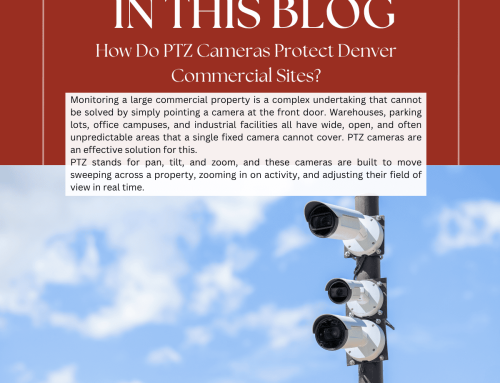
PTZ cameras, license plate recognition, night vision, and weather-resistant housings are deployed to cover large lots and remote areas, including sites on the edge of Castle Rock or Parker where open space surrounds the property. Perimeter and outdoor surveillance extends coverage well beyond the building itself.
Security Camera Selection and NDAA Considerations
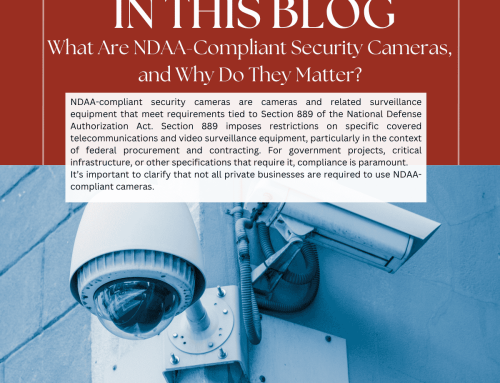
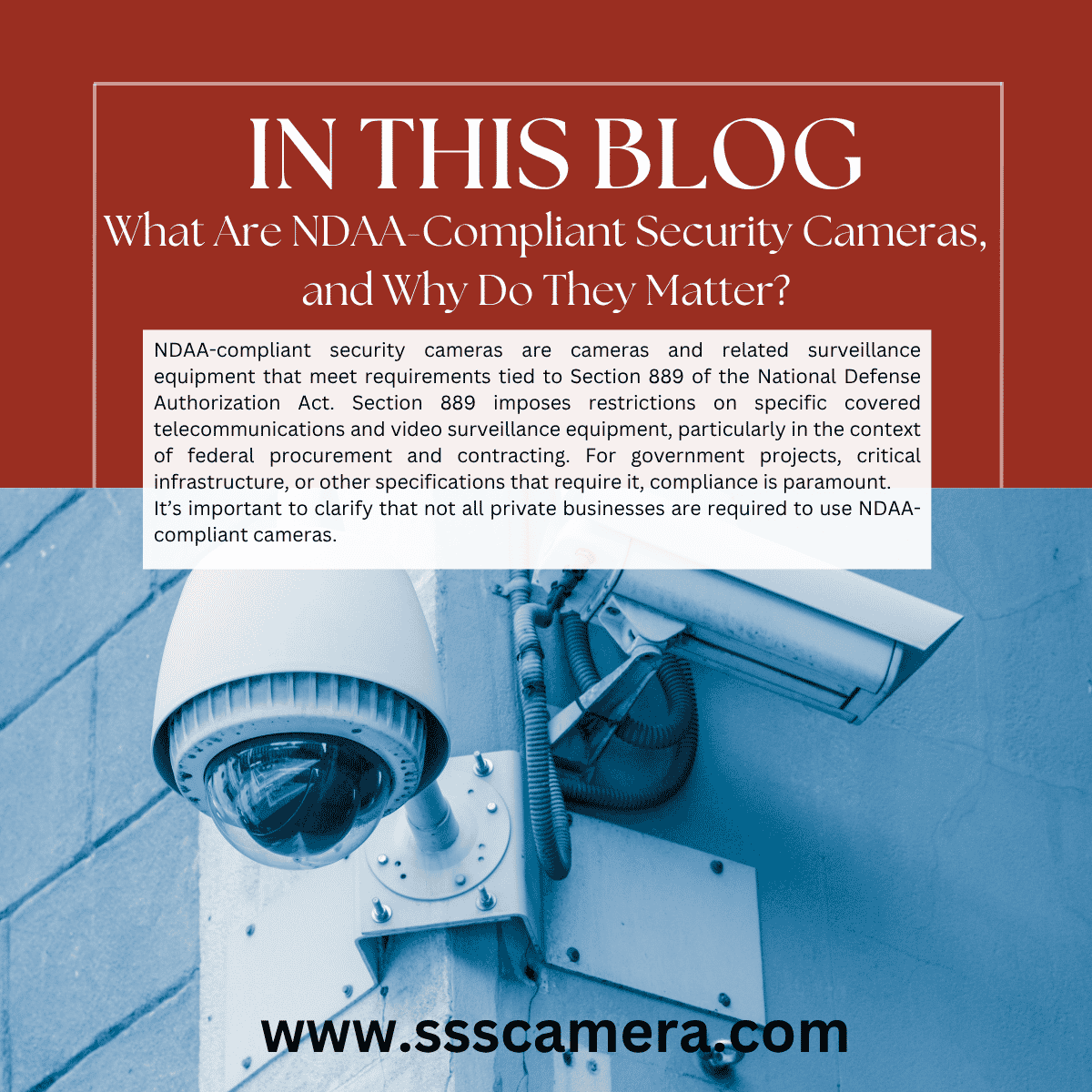
Certain commercial, government, and infrastructure projects have specific equipment requirements. Section 889 of the 2019 NDAA established federal restrictions on certain covered telecommunications and video surveillance equipment, particularly in the context of government contracting. Most private businesses are not subject to those rules, but SSS can provide camera options designed to meet NDAA-related project requirements, including NDAA-compliant cameras, when a project calls for them.
How Does Security Surveillance System Build a Custom Security Plan?
1. Understand the Property
A review of the building, the grounds, and the day-to-day operations of the business is conducted.
2. Identify Security Priorities
We define what matters most to our clients, whether that is theft, controlled entry, after-hours protection, or liability.
3. Map Cameras and Entry Points
Prior to the selection of equipment, we meticulously plan the camera positions, fields of view and door locations.
4. Select the Appropriate Technology
The equipment is matched to the property and the project requirements, rather than the other way around.
5. Integrate Systems Where Needed
Cameras, access control, alarms, and intercoms are connected where it adds value.
6. Install, Test and Support the System
Our services include installation, testing, coverage, staff training, and ongoing support.
SSS is a leading provider of security services in Colorado, with a strong reputation for delivering reliable and efficient solutions to a wide range of clients across the state.
Frequently Asked Questions Regarding Custom Security Systems in Colorado
What is a customized commercial security system?
A customized commercial security system is one that is designed around a specific property and business, rather than a standard package. The system integrates cameras, access control, alarms and intercoms in the quantities and locations that align with the specific requirements of each site, taking into account its layout, industry, staffing levels, assets and operational hours.
What are the reasons why different industries require different security systems?
Each industry faces a unique set of risks. Retailers, for instance, may have concerns regarding theft at checkout, while apartment communities may prioritize safety measures against unauthorized entry. Similarly, veterinary hospitals may focus on effective medication storage to ensure patient safety. Given that assets, customers, and access requirements vary, the cameras, door controls, and alarms that provide protection for one business may leave another vulnerable.
What elements should be included in a security plan for a business operating in Colorado?
A robust plan encompasses entrances and exits, parking and outdoor areas, designated spaces for employees, and areas housing high-value assets. Typically, this system integrates video surveillance with access control, burglar alarms, and intercoms as required, with the system adapting to local conditions such as lighting, traffic, and weather conditions typical of Colorado.
Can security cameras, alarms, access control, and intercoms work together?
Yes. When integrated, a door opening can trigger an alarm, bring up the nearest camera, and log who used which credential. Intercoms have the capability of verifying visitors on video before granting entry. Integration reduces blind spots and facilitates the review of events across the entire property.
Can a security system be expanded later?
Yes, provided it is designed with growth in mind. As a business grows or its requirements evolve, the option to add extra cameras, doors, sensors, or intercoms is available. It is advisable to plan cabling, recording capacity and network requirements, as this will make future additions simpler and less disruptive.
Does SSS install security systems throughout Colorado?
Yes, Security Surveillance System provides services to businesses across Denver, Aurora, Boulder, Colorado Springs, Fort Collins, Lakewood, Westminster, Thornton, Arvada, Broomfield, and many other communities in Colorado. The company has been serving Colorado properties since 2006.
What are NDAA-compliant security cameras?
NDAA-compliant cameras are designed to adhere to the federal restrictions outlined in Section 889 of the 2019 National Defense Authorization Act. This legislation imposes limitations on certain covered telecommunications and video surveillance equipment in government contracting. These products are typically requested for government, infrastructure, or specifically specified projects. SSS can provide compliant options when required.
What is the cost of a custom security system in Colorado?
The cost of the system will depend on the number of cameras and doors, whether the coverage is indoor or outdoor, the wiring requirements, the network needs, the recording capacity, the alarm components, the property size, and the installation complexity. As these vary significantly, conducting an on-site assessment provides a more precise estimate than relying on a generic package price.
Conclusion
The importance of selecting the right security system cannot be overstated. The right system is designed around the property’s actual needs. Factors such as industry, building layout, location, traffic, employees, customers, assets, and operating hours all influence the design, and a plan that accounts for each of them protects a business better than one built from a template.
Get a Custom Security Plan for Your Colorado Business
Are you interested in a security system that is tailored to your property? For a free consultation and site assessment, please contact Security Surveillance System. We will conduct a site visit, understand your priorities, and recommend a plan that fits.